

Vermont
Data Center
Defense

Community Toolkit — Full Edition

vtdatacentertoolkit.org

Published 2026  ·  All content sourced from public record

Vermont came within seven votes of passing the strongest data-center rules in the country. The Governor vetoed them — but the door is still open. This is the plain-language field guide to what happened, why it reaches your bills and water, and how you help finish the job.

What's inside

  1. The case — what a giant data center would do to your bills, water, and voice, and how close Vermont came to stopping one.
  2. Action playbooks — nine ways to act, from a five-minute email to sustained organizing.
  3. Action tools — find your decision-makers and send ready-made messages.
  4. The federal backdrop — and why Vermont's own levers matter more.
  5. Sanders' record — the federal counterpart on AI data centers.
  6. Sources & notes — every claim sourced from public record.

Contents

  1. 1The case — situation, grid, regulation, and what good looks like
  2. 2Action playbooks — nine ways to act, easiest to most sustained
  3. 3Action tools — find your decision-makers and use the templates
  4. 4The federal backdrop — and why Vermont's own levers matter more
  5. 5Federal counterpart — Senator Sanders' AI data-center record
  6. 6Sources, credits & notes
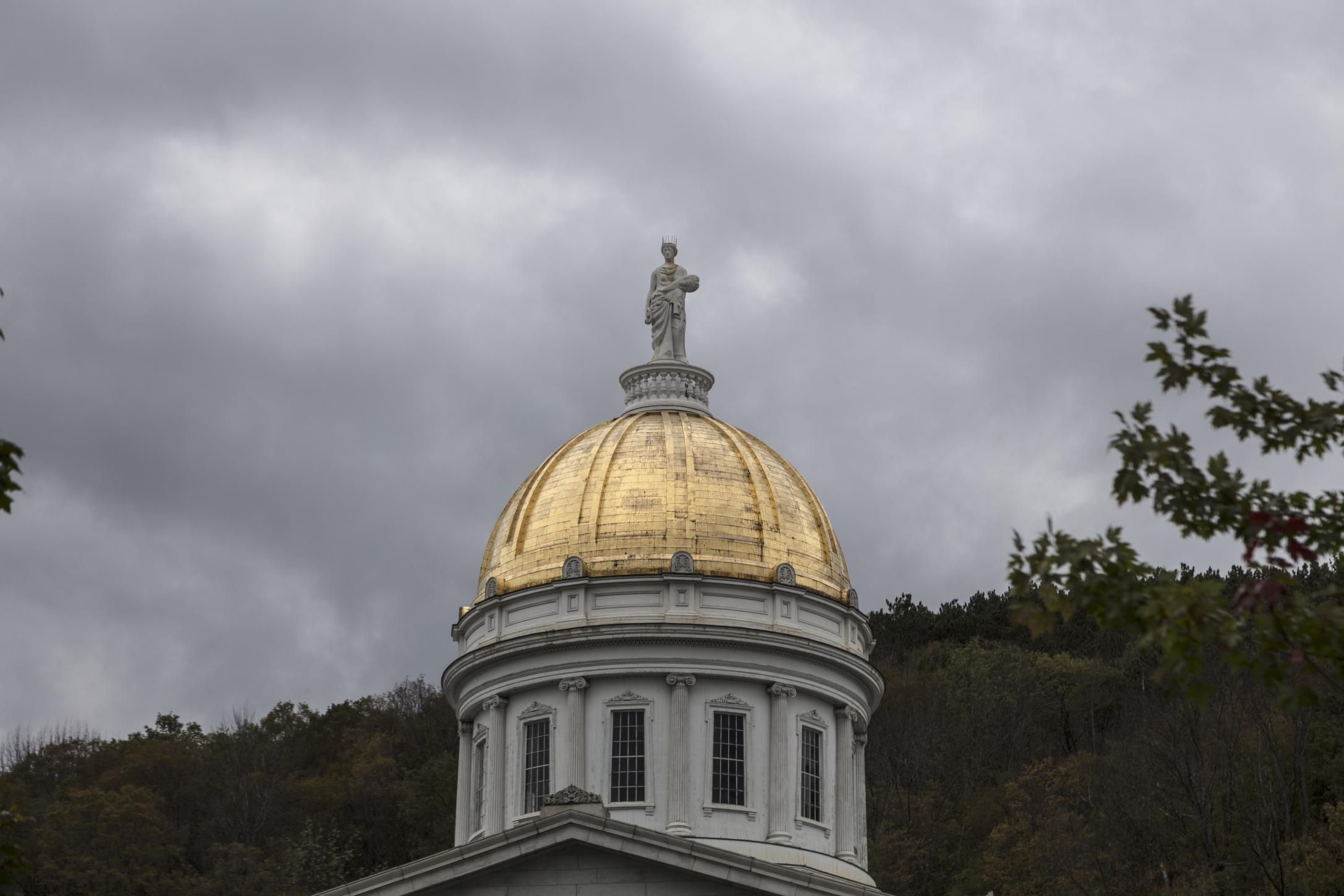
Vermont State House in Montpelier, a Greek Revival building with a golden dome, on a clear day
Carol M. Highsmith / Library of Congress

Vermont Community Resource

Vermont almost made Big Tech play by the strongest data-center rules in the country. The Governor said no. Here's how you finish the job — starting today.

Vermont has no giant data center — yet. Our grid is too small for one. Lawmakers passed a bill to stop it: H.727. The Governor said no — by just seven votes. The door is still open. The tools to close it are yours.

Find your 3 decision-makers →See what you can do this week →Download the printable toolkit (PDF)View printable version
1Why this matters to you

What a giant data center would mean for you

A giant data center won't stay in one town. Here's how it touches your life.

Caution

Your power bill could rise.

Powering a giant data center is costly. That cost often lands on you.

Reference

Your water is at risk.

These centers use huge amounts of water to stay cool. Vermont has never had one this big.

Win

You lose your say.

With no law in place, you have less control over what gets built near you. H.727 gives it back.

Caution

You carry the risk.

Higher bills, more water use, less control — while the company keeps the profit.

Group

Who this affects

Everyday Vermonters — maybe you:

  • Renters and homeowners — anyone who pays a power bill
  • Families on a tight budget — every extra dollar counts
  • Seniors on fixed incomes — bills go up, income doesn't
  • Farmers and rural households — your water and land come first
  • Small-business owners — higher power costs eat your margin
  • Anyone who drinks the local water — that's all of us
2The situation

What happened — and what comes next

Group

The mandate

In 2026, Vermont's Legislature passed H.727 — one of the nation's strongest data-center bills.All three parties backed it. The Senate voted 26–3. The House passed it near-unanimously. The goal: protect ratepayers, protect your water, make Big Tech pay its own way.

Reference

The veto — and the open door

Governor Scott vetoed H.727 on May 28, 2026.The House tried to override it. That vote failed 83–52 — seven short of the 90 needed. Today Vermont has no data-center-specific law. The door your Legislature voted to close stands open.

H.727 is not law. Don't rely on it today. It's the ready-made bill to revive next session — nothing more.

Win

Protect what you have

You're not starting from zero.Act 250 is Vermont's land-use review. PUC §248 reviews power-generation and transmission projects. Town Meeting gives your town 250+ years of direct democracy. The Vermont Public Records Act lets you demand documents. H.727's text is ready for next session. The job: use these tools, and put the mandate back to a vote.

The vote record

Senate passage
26–3
House passage
Near-unanimous
Override attempt (90 needed)
83–52
Votes short of override
7

May 28, 2026 — veto date

A classic Vermont covered wooden bridge spanning a stream amid autumn foliage
Carol M. Highsmith / Library of Congress

Legislative timeline

  1. Completed:

    Jan 6, 2026

    S.205 introduced — temporary moratorium on AI data centers >100 MW until 2030-07-01

    Sen. Rebecca White's bill referred to Senate Finance; stalled in committee. The vehicle that moved was H.727. S.205 died at adjournment May 29, 2026.

  2. Completed:

    2026 session

    H.727 passed Senate 26–3

    "VT Sustainable Data Centers Act" — a 20 MW framework (megawatts, or MW, measure electricity demand), plus ratepayer protections, water/PFAS monitoring, and on-site renewables.

  3. Completed:

    2026 session

    H.727 passed House — near-unanimous voice vote

    One of the most decisive data-center votes in any state legislature.

  4. Completed:

    May 28, 2026

    Governor Scott vetoed H.727

    Vermont has no data-center-specific law as a result. H.727 did not become law.

  5. Completed:

    May 29, 2026

    House override failed 83–52 — seven votes short of the 90 needed

    S.205 also died at adjournment the same day. No operative data-center statute exists in Vermont.

  6. Pending:

    Next session

    Revive H.727 — the mandate already exists

    The bill text is ready. The supermajority voted for it once. The job is to close a seven-vote gap.

A vetoed bill and a failed override are not defeat — they are a mandate with a seven-vote gap.

Win

Bottom line

The votes already exist.A vetoed bill and a failed override are not defeat — they are a mandate with a seven-vote gap. Vermont's own tools are in force today. The bill is ready for next session.

5The grid

Vermont's grid — the facts

You just read how this could raise your bills and touch your water. Here are the numbers, with sources. Vermont's power grid is small. So one huge building can change it for everyone.

Each of these numbers comes from two or more sources.They all say the same thing. Vermont's grid is small. Any big new user changes it for every home that pays a power bill.

Why this matters: together, these four numbers show how big one data center is next to Vermont's whole grid — and the cost to connect it can land on your power bill.

One data center vs. all of Vermont
Vermont's data centers today: ~5 MW5 MWOne big new data center: up to ~300 MW300 MWAll of Vermont at peak: 880 MW880 MW
One data center vs. all of Vermont
CategoryValue (MW)
Vermont's data centers today: ~5 MW5
One big new data center: up to ~300 MW300
All of Vermont at peak: 880 MW880

The 300 MW bar is an example — no specific facility is represented. Big AI data centers elsewhere have requested 100 to 500+ MW. Sources: Vermont Dept. of Public Service, 2026 Annual Energy Report; VTDigger, 2026-02-24.

~880 MW

Vermont statewide peak electric demand

Vermont Dept. of Public Service, 2026 Annual Energy Report

+7.5%

GMP rate increase effective Oct 1, 2026

PUC Case 26-0096-TF (confirmed)

~$30M

Estimated grid hookup cost that stopped the St. Albans proposal, 2025

VTDigger, 2026-02-24

~5 MW

Vermont's current total data-center electric load — three small Chittenden Co. facilities

VTDigger, 2026-02-24 · Vermont Public

Reference

One facility could rival the entire state's peak

Vermont's statewide electric peak demand is ~880 MW (Vermont DPS, 2026 Annual Energy Report) — that is the most power the whole state uses at once. One giant data center is not just "a new customer." It is a change so big it reshapes power planning for every home that pays a bill.

What that means: One big data center can act like a second Vermont on the grid.

What that means for you: Planners size the whole grid around it, and you help pay.

Reference

Rates are rising — already above the national average

Vermonters pay roughly 28% above the U.S. average for electricity (~22.6¢ vs ~17.6¢/kWh).Green Mountain Power rates rise +7.5% effective October 1, 2026 (PUC Case 26-0096-TF). New data centers cost a lot to hook up to the grid. Those costs can land on homes that already pay some of the highest rates in the country.

What that means: Your power already costs more here than in most states.

What that means for you: New data-center hookup costs could push your bill even higher.

The +7.5% increase is for Green Mountain Power. If you see a ~30% number, that's a different utility — Swanton Electric, tied to the Highgate Falls dam failure — not GMP.

Reference

The St. Albans test — the grid itself was the brake

Vermont's one real try at a big data center fell apart in 2025.Just one grid hookup would have cost ~$30 million. The small grid stopped it — not any law. Any project that fits the grid needs huge new equipment. Someone has to pay for it.

What that means: Vermont's grid was too small to plug in one big data center.

What that means for you: The cost to grow the grid would land on homes like yours.

VTDigger (2026-02-24) · Vermont Public (2026-02-26)

Win

Vermont still has the luxury of proactive rules

Vermont's current data-center footprint is tiny — ~5 MW across three small Chittenden County facilities.Green Mountain Power has had only "one or two very speculative inquiries" — a few early, unsure questions. There is no crisis yet. Vermont still has time to make calm rules, instead of rushing during an emergency.

What that means: No big data center is here yet, so there is still time.

What that means for you: Vermont can set fair rules now, before your bills are at risk.

VTDigger (2026-02-24) · Vermont Public

Reference

The national pattern behind your rates

Vermont's high rates aren't isolated.A national investigation found that data centers are now a top cause of rising bills. On a big regional grid called PJM — which covers 13 states and 65 million people — last year's capacity auction (the yearly sale that pays power plants to stand ready) jumped 800%. PJM's own market monitor (an independent watchdog) blamed 63% of that jump on data centers.

Utilities pass those costs to homes. One estimate says the average home's rates could climb as much as 70% over 15 years if nothing changes.

What that means: Where data centers grow fast, power bills have jumped sharply.

What that means for you: Vermont can act now to keep this from happening here.

Win

Bottom line

Vermont's grid is so small that one giant building is a statewide event.Rates are already high. The small grid stopped the last try. Vermont can still set rules before a project arrives and forces its hand. But that chance stays open only if H.727 is brought back first.

3Regulatory landscape

Vermont's regulatory tools — what exists today

Reference

Plain-language key

  • §248 — Vermont's power-plant permit law.
  • PUC — the state board that approves power projects.
  • Certificate of Public Good / CPG — the approval §248 gives.
  • Act 250 — Vermont's land and environment review.
  • Ratepayer — anyone who pays a power bill.
  • Load — the electricity a building uses.
  • 20 MW — about the power of a small city.
  • Moratorium — a temporary stop.
  • Veto / override — governor blocks a bill; lawmakers can overrule with enough votes.
Vermont regulatory tools for data-center oversight — scope, data-center coverage, and current status
LeverTypeCovers data centers?Status
30 V.S.A. §248Energy — generation & transmissionNo — covers gen/tx infrastructure, not loadActive
Act 250 / Act 181 / S.325Land-use environmental reviewYes — criteria 1 (water), 8 (aesthetics), 9 (energy), 10 (town plan)Active (S.325 updated 2026)
H.727 — 20 MW thresholdData-center-specific PUC frameworkYes — but vetoed May 28, 2026NOT in force
Act 179 / Global Warming Solutions ActClimate — 100% renewable by 2035Indirect — fossil backup directly conflicts with statuteActive
Town Meeting / Zoning (24 V.S.A. §4414 / §4415)Local siting — bylaws & interim rulesYes — conditional use, interim bylaws, moratoriumActive

Reference

30 V.S.A. §248 — PUC Certificate of Public Good (generation & transmission)

§248 is Vermont's power-plant permit law.It covers new power plants and power lines. It does not cover "load." Load means the electricity a building uses. A data center is a big user of power. It is not a power plant. So §248 does not review a data center by itself.

Here is when §248 does apply.Say the project builds its own power source, like gas turbines on site. Or say it needs new power lines or a substation. That kind of work does trigger §248 review by the PUC. The PUC is the state board that approves power projects. That is where cost and energy questions go on the record. It is also where anyone who pays a power bill can speak up.

Here is the gap, and why H.727 mattered.§248 does not cover data-center load. So Vermont had no rule aimed at the center itself. No rule for its power use, its water use, or its backup diesel. H.727 would have fixed that. It set a 20 MW size that triggers PUC review of the center itself. But H.727 was vetoed. So the gap is still open.

What that means: Vermont can review the power lines, but not the data center itself.

What that means for you: A data center could be built with no direct state review.

30 V.S.A. §248 · legislature.vermont.gov (H.727 bill status)

PetitionPUC ReviewPublic CommentDecision

Four-stage horizontal flow: Petition filed, then PUC Review, then Public Comment period, then Decision.

Vermont §248 Certificate of Public Good process — applies to generation and transmission infrastructure, not to data-center load directly

Win

The fix other states are already using

The same report found a fix.A "rate class" is a group of customers who pay the same way. Data centers do not fit the normal groups. So some states make a new group just for them. Maryland and Oregon both passed laws in 2026. They put big data centers in their own rate class. Now those companies pay for their own power needs. That way the cost does not land on your bill.

Vermont could do the same through §248 or a new H.727.

What that means: Other states make data centers pay their own power costs.

What that means for you: A fair rule here keeps the cost off your bill.

Reference

S.325 — Signed June 16, 2026 (land-use / Act 250 Tier, not energy or data-center law)

Governor Scott signed S.325 on June 16, 2026.It changes Act 250, which is Vermont's land and environment review. It updates how Act 250 sorts land into "Tiers," and how towns and regions plan. This is a land and building-site law. It is not an energy law or a data-center law. Cite it only that way. Check the signed bill text before you quote any acre or MW numbers.

What that means: S.325 updates land review, not energy or data-center rules.

What that means for you: It shapes where big projects can go near your town.

S.325 (signed 2026-06-16) · legislature.vermont.gov

Reference

Act 250 + Act 181 — Land-use review

Act 250 (1970) is Vermont's statewide land review.It checks big projects before they get built. It looks at water pollution, how a project looks, and how much energy it needs. It also checks how the project fits your town and regional plans. Act 181 (2024) updated the Tier system. S.325 (2026) changed the Tiers again. A big factory in a rural area is exactly what this review is built to catch. Act 250 gives you full party status. That means a real seat in the case, plus the right to appeal.

What that means: Act 250 lets Vermont review a big project's land and water impact.

What that means for you: You can join the case and speak for your town.

VNRC · act250.vermont.gov · Act 181 (2024) · S.325 (2026)

Win

Vermont is legally bound to 100% renewable by 2035

Act 179 (H.289) and the Global Warming Solutions Act bind Vermont to 100% renewable electricity by 2035.These laws also set firm cuts to pollution. A "hyperscale" data center is a huge, warehouse-size one. Many run on diesel backup when power drops. That diesel does not just upset people. It clashes with Vermont law. So this is a legal tool, not just a talking point.

What that means: Vermont law requires clean power, so diesel backup breaks the rules.

What that means for you: You can point to state law to fight dirty backup power.

Act 179 · Global Warming Solutions Act · Renewable Energy Vermont

Group

Follow the money — and demand to see it

The same reporting found these deals are often hidden.Companies use secret contracts and blacked-out papers to hide the terms. That reporting argued data centers often don't cover the full cost of the power lines built for them. The rest of the cost can fall on other people who pay power bills. Power companies in other states expect home bills to jump because of this. That could mean a higher bill for you.

Vermont's Public Records Act, in Playbook 3, can force these deals into the open. It can do this before any deal is signed.

What that means: Secret deals can push data-center costs onto regular customers.

What that means for you: A records request can reveal the deal before it is signed.

Win

Bottom line

Vermont has real tools today.You have Act 250, §248 for power lines, Town Meeting, and the Public Records Act. But one tool is missing: a rule aimed right at data centers. §248 does not cover data-center load. H.727 would have closed that gap, but it was vetoed. So use the tools you have now. And push to bring back the bill to close the gap.

What that means: Vermont has strong tools, but no rule made for data centers.

What that means for you: Use today's tools and ask lawmakers to revive H.727.

4Environmental context

Water and energy: what the national record shows

A 1941 wind turbine on a Vermont hilltop, an early example of renewable energy infrastructure in the region
U.S. DOE / NREL — public domain

Vermont-specific water-use figures for a hypothetical facility aren't independently corroborated, so we don't state them here as fact.In plain words: we could not double-check those local numbers, so we leave them out. But here is what the national record does show:

Reference

National water-use record

  • Big "hyperscale" data centers use a lot of water. Where they get built, they are often among the biggest water users of any factory. They use water to stay cool. Large ones can use millions of gallons a day (national figures, attributed to independent engineering and utility records).
  • Vermont's water law already covers any large new water use. A new facility must get permits first. It may also face Act 250 Criterion 1 (water pollution) review — the part of Act 250 that checks water pollution.

What that means: Data centers can drink up huge amounts of water to stay cool.

What that means for you: Vermont law lets the state review that water use near you.

National context: FWW / MediaJustice toolkits (attributed) · VT law: 10 V.S.A. ch.151

Win

Legal conflict with fossil backup

Vermont's climate promises clash with big fossil-fuel backup.Act 179 and the Global Warming Solutions Act bind Vermont to firm cuts in pollution. A huge data center that runs on diesel backup runs straight into that law. So this is a legal argument, not just an earth-friendly one.

What that means: Diesel backup for a data center breaks Vermont's climate law.

What that means for you: State law gives you a way to fight dirty backup power.

Group

How to get Vermont-specific data

The best source of Vermont water data is the PUC §248 process.That is the Public Utility Commission's review of new power plants and power lines. You can intervene in the docket, which means you formally join the case — a "docket" is just the official case file. Then you can put your question on the record. The Department of Public Service — the ratepayer's advocate, the office that speaks for people who pay power bills — is already part of the case. So is the Agency of Natural Resources (ANR), the state office that protects water, land, and air. Both can carry the argument for you.

What that means: The §248 case is where you can demand real water data.

What that means for you: You can join the case, and two state offices back you up.

Win

Bottom line

Across the country, big data centers use a lot of water. Vermont law already controls large water use.Fossil-fuel backup clashes with Vermont's climate law. If a project builds its own power lines, the PUC §248 case is your best place to act. That is where you put water and energy questions on the record under Vermont law.

What that means: Vermont law already gives you a place to challenge the water and energy use.

What that means for you: Bring your water and power concerns to the §248 case.

Action Playbooks

Nine ways to act — ordered from easiest to most sustained

Each playbook is a real out-of-state win, re-aimed to a Vermont mechanism. Start at Playbook 1. Each step makes the next one easier.

Group

Vermont note — no county government

Vermont has no operative county government for siting.Town bodies — Selectboard, Planning Commission, Development Review Board — are the local decision-makers. These playbooks aim at the right Vermont body at each step. County lookups, national tools (Ballotpedia, USA.gov), and other states' county-board tactics don't apply here.

At a glance

Compare all nine tactics

Each row is a full playbook below. Find your entry point, then read the card.

Nine playbooks comparison — effort level, timeline, and who each tactic is best suited for
#TacticEffortTimelineBest for
1Email your real decision-makerLow10 minAny resident
2Write a Letter to the Editor naming H.727Low30 minAny resident
3File a Vermont Public Records Act requestLow~1 hourAny resident
4Show up at Town Meeting and warn an articleMediumDays–weeksA small core team
5Ask your selectboard to adopt an interim bylawMediumWeeksOrganizers with board relationship
6Write data centers into your town's zoningMediumMonthsOrganizers + Planning Commission
7Take party status in Act 250 reviewHighMonthsCommitted resident or org
8Intervene in the PUC §248 docketHighMonthsOrganizers; counsel helpful
9Revive H.727 — campaign for re-introductionHighSession-longOrganized coalition
Playbooks 1–9

The nine playbooks

1Playbook 1:

Email your real decision-maker

10 min

In other states, one constituent email proving "I'm a local voter and I'm watching" moved officials to take a public position.

Vermont steps

  1. Find your decision-maker

    Use legislature.vermont.gov/people to get your House Rep and Senator (for H.727 revival). Use sos.vermont.gov/elections/town-clerks to find your town clerk (for local siting).

  2. Aim your email at the right body

    1. State policy ask (revive H.727) → email your legislators.
    2. Local siting matter → email the town clerk, Planning Commission, or Development Review Board — not your legislator. The town body decides siting, not Montpelier.
  3. Use the Vermont-aimed template on the Actions page

    Add one sentence in your own words. Include your town and ZIP to prove you're a constituent. Then send.

Group

Effort · Who

10 minutes. Any resident.

legislature.vermont.gov/people · sos.vermont.gov/elections/town-clerks · FWW Tactic 1

2Playbook 2:

Write a Letter to the Editor naming H.727

30 min

Letters to the editor are the cheapest earned-media lever — they reach decision-makers and neighbors at once.

Vermont steps

  1. Pick one point

    For example: "The Governor's veto left Vermont with no data-center law." One clear argument lands harder than three.

  2. Write 150–200 words

    1. Open with why a neighbor should care.
    2. Tie it to a recent VTDigger, Vermont Public, or local paper article for placement odds.
    3. Name your target: your legislator (revive H.727) or your selectboard (adopt interim bylaws).
  3. Submit to the opinion editor

    Email the opinion editor. Paste in the body — do not attach a file. Find a ready-to-customize template on the Actions page.

Group

Effort · Who

30 minutes. Any resident.

WI "Big Tech Unchecked" Tactic 15 · FWW Tactic 3

3Playbook 3:

File a Vermont Public Records Act request

~1 hour · template provided

In Wisconsin, public-records law forced Microsoft to disclose water-use data it had claimed as a trade secret. Opacity broke under the law.

Vermont steps (1 V.S.A. §§315–320)

  1. Identify the records officer

    Town clerk for local records. Agency records officer for state agency records.

  2. Email a short, specific request

    Name the records and date range. Cite the Vermont Public Records Act, 1 V.S.A. §§315–320. Use the copy-paste template on the Actions page.

  3. Track the clock

    1. Substantive response required within 3 business days.
    2. Any extension must be in writing and is limited to 10 additional business days.
  4. Challenge "trade secret" withholding

    If energy or water data is withheld as a trade secret under §317(c)(9), demand segregation and release of non-exempt portions plus the specific factual basis. A bare "trade secret" label is not self-executing.

  5. Appeal if denied

    Appeal in writing to the agency head (5-business-day decision), then Superior Court. The agency bears the burden; attorney's fees are recoverable if you substantially prevail.

Group

Effort · Who

~1 hour to file; litigation step needs counsel. Any resident for the initial filing.

1 V.S.A. §§315–320 · §318 (timelines) · §317(c)(9)

4Playbook 4:

Show up at Town Meeting and warn an article

Days to weeks

A local body in DeKalb County, Georgia passed a 100-day moratorium to study a project. Vermont has a stronger tradition: Town Meeting direct democracy backed by statute.

Vermont steps (Vermont has no operative county government — go to your town)

  1. Contact your town clerk

    The town clerk keeps the warnings and identifies the Selectboard, Planning Commission, and Development Review Board.

  2. Force an article onto Town Meeting yourself

    1. Draft the article text.
    2. Collect signatures from 5% of registered voters — name, signature, and address.
    3. File with the town clerk at least 47 days before the meeting (17 V.S.A. §2642).
  3. Turn out neighbors to decide it on the floor

    Organize carpools, reminders, and a clear "ask" for the meeting.

Group

Effort · Who

Days to weeks. A small core team.

24 V.S.A. ch.117 · 17 V.S.A. §2642 · sos.vermont.gov local-petitions

5Playbook 5:

Ask your selectboard to adopt an interim bylaw

Weeks · the Vermont moratorium

A moratorium buys time to write real rules before a developer can lock in approvals under existing zoning.

Vermont steps (24 V.S.A. §4415)

  1. Ask the Selectboard — not a citizen petition

    Ask the Selectboard to adopt an interim bylaw under 24 V.S.A. §4415. This is a board action, not a direct citizen petition.

  2. Pair it with a planning study request

    §4415 requires an active planning effort. Ask the board to simultaneously commission a data-center planning study or bylaw update.

  3. Turn residents out for the public hearing

    The board adopts after one warned public hearing. Your job: fill that room.

  4. Use the window to push permanent bylaws

    The interim bylaw lasts up to 2 years (plus a 1-year extension). Use that window to drive permanent data-center bylaws through §4441/§4442.

Group

Effort · Who

Weeks. Organizers with a selectboard relationship.

24 V.S.A. §4415 · trorc.org · MediaJustice DeKalb County (re-aimed to Vermont municipal level)

6Playbook 6:

Write data centers into your town's zoning

Months

Prince William County, Virginia passed zoning that confined data centers to industrial-zoned areas only.

Reference

Vermont note — opponents want conditional use or exclusion

Advice from other states to make data centers a "permitted use" is inverted for Vermont opponents. You want conditional use under strict standards or restriction to an industrial-only district.

Vermont steps (24 V.S.A. §4414(3))

  1. Bring a proposal to the Planning Commission

    Propose making data centers a conditional use under strict standards — or limit them to an industrial-only district. Under 24 V.S.A. §4414(3), conditional use must not cause undue adverse effect on community-facility capacity, area character, or traffic.

  2. Include Act 250 criteria in the conditional-use standards

    A town may adopt Act 250 criteria into its conditional-use review, adding water, energy, and aesthetics standards.

  3. Testify at warned hearings

    1. Planning Commission warned hearing.
    2. Selectboard adoption hearing.
  4. Know the adoption timeline

    Board adopts (effective 21 days later) or warns it to ballot. To defend a board-adopted bylaw against repeal, know the §4442 process.

Group

Effort · Who

Months. Organizers plus Planning Commission engagement.

24 V.S.A. §4414(3) · §4441–§4442 · MediaJustice Prince William (re-aimed to Vermont town level)

7Playbook 7:

Take party status in Act 250 review

Months

Act 250 is a statewide environmental review where residents can question, rebut, and appeal a large project — but through party status, not open online comment.

Vermont steps

  1. Watch for the public notice for your district

    Find your District Environmental Commission (one of nine) at act250.vermont.gov.

  2. File a Party Status Petition before the deadline

    Name the specific criteria you'll contest: Criterion 1 (water pollution), Criterion 8 (aesthetics/light), Criterion 9 (energy/soils), Criterion 10 (town/regional-plan conformance).

  3. Participate in the hearing fully

    Present evidence, cross-examine witnesses, and keep your party status to the end to preserve appeal rights.

  4. Appeal if aggrieved

    Appeal within ~30 days to the Environmental Division (de novo review, your criteria only). Engaging your Regional Planning Commission and town Planning Commission early is critical — they are automatic parties and Criterion 10 turns on their plans.

Group

Effort · Who

Months; persistence required. A committed resident or organization.

10 V.S.A. ch.151 §6086(a) · act250.vermont.gov · §8504 appeals

8Playbook 8:

Intervene in the PUC §248 docket for power infrastructure

Months · counsel helpful

The data-center building goes through Act 250 and zoning. The dedicated power infrastructure — a substation, line, or on-site generation — triggers PUC §248 review (30 V.S.A. §248). That's where the ratepayer-cost argument goes on the record.

Reference

No large-load tariff precedent in Vermont — argue within §248

Vermont has no large-load tariff precedent like Ohio or Kansas. H.727's PUC equity contract would have created one — but H.727 was vetoed. Argue ratepayer protection as advocacy within existing §248, not as an existing tariff right.

Vermont steps

  1. Find the docket

    Go to puc.vermont.gov → Public Participation → ePUC. Search by company, town, or case number.

  2. Watch the scheduling order for the intervention deadline

    The petitioner must give 45-day advance notice. The scheduling order sets the intervention deadline.

  3. Attend the public hearing

    Public comment at PUC hearings requires no party status. Show up in the host community.

  4. File a motion to intervene for full party status

    File through ePUC before the deadline, stating your stake: abutter, environmental interest, or ratepayer.

  5. Lean on the Department of Public Service and ANR

    Both are automatic parties. Put the ratepayer-cost and environmental arguments to them — they can carry the analysis with far more staff capacity.

Group

Effort · Who

Months; counsel helpful. Organizers or intervenors.

30 V.S.A. §248 · puc.vermont.gov · publicservice.vermont.gov

9Playbook 9:

Revive H.727 — put the mandate back to a vote

A session-long campaign

The policy already commands the votes. It passed both chambers once. The bill text exists. The job is to re-introduce it next session and close the gap.

Reference

Frame H.727 only as a vetoed bill and next-session target

H.727 is not in effect today.Any statement that H.727 is current law is false. Frame it only as: the policy Vermont's Legislature already voted for, vetoed by the Governor, and ready to revive next session.

Vermont steps

  1. Build a coalition

    CLF, VNRC, VPIRG, town officials — small core team, clear goal, public meetings.

  2. Ask your legislators to re-introduce H.727's framework next session

    1. ~20 MW trigger for PUC review of the data center itself.
    2. PUC-approved large-load equity contract insulating ratepayers from infrastructure costs.
    3. Quarterly public reporting of energy and water use.
    4. Limits on fossil-fuel backup generation.
    5. On-site renewables requirement.
    6. Closed-loop cooling and PFAS monitoring.
    7. Public Records Act carve-out so energy and water data cannot hide behind "trade secret."
  3. Route to the right committees

    House Energy & Digital Infrastructure / Senate Natural Resources & Energy (heard H.727), Government Operations (records carve-out), Ways & Means (incentives).

  4. In testimony, cite the demonstrated supermajority

    Senate 26–3, near-unanimous House. Only the override math (83 of 90 votes) fell short. The mandate is real.

Group

Effort · Who

A session-long campaign. An organized coalition.

legislature.vermont.gov/bill/status/2026/H.727 · governor.vermont.gov (veto, May 28 2026) · CLF · VNRC · VTDigger

Next step

Ready to act?

Start with Playbook 1 — a 10-minute email. Use the Actions page to find your decision-makers and copy the template.

Go to Action Tools →

Action Tools

Find your decision-makers. Use the templates. Act this week.

Vermont has two chains of decision-makers, depending on what you're asking for. Get the right person. Send the right message.

Step 1

Your action checklist — step by step

Work through these in order. Each step earns the next.

Commit out loud: tell one person which step you'll finish first. A commitment said to someone else is one you're far more likely to keep.

  1. Find your state legislators

    Go to legislature.vermont.gov/people.

  2. Send Template A to your House Rep and Senator

  3. Find your town clerk

    Go to sos.vermont.gov/elections/town-clerks.

  4. Send Template B to your Selectboard and Planning Commission

  5. Write a 150–200-word Letter to the Editor (use Template C)

    Submit to VTDigger, Seven Days, or your local paper.

  6. File a Public Records Act request

    Request any existing town correspondence with data-center developers.

  7. Attend your next Selectboard or Planning Commission meeting

    Ask when data-center siting will be warned for public discussion.

  8. Bookmark the H.727 bill-status page

    Go to legislature.vermont.gov/bill/status/2026/H.727 and check back each session for its re-introduction.

Step 2

Find your 3 decision-makers

Group

Why 3?

Vermont data-center decisions happen at two levels — state law (your legislators) and local siting (your town body).National lookup tools miss the local chain. Use the Vermont-specific links below.

Group

What's worked elsewhere

Residents in other states started where you can:documenting their own rising bills, comparing with neighbors, and bringing that evidence to regulators and legislators — to demand a separate data-center rate class and public disclosure of utility deals.

The templates below are your version of that.

Card 1 — State legislators

Use when: asking for H.727 revival or any state-level change.

Find your House Rep(s) and Senator by town at the Vermont Legislature directory:

Find my legislators →

Returns your House Rep + Senator with email and phone. Use the email template below for the H.727 revival ask.

Card 2 — Town officials

Use when: asking about local siting, interim bylaws, or zoning.

Start with your town clerk.The clerk identifies your Selectboard, Planning Commission, and Development Review Board, and keeps the warnings and records.

Find my town clerk →

Vermont has no operative county government for siting. Never go to a county body — go to your town.

Card 3 — Vermont PUC

Use when: power infrastructure for a data center triggers §248 review.

Find open dockets, scheduling orders, and hearing notices at Vermont Public Utility Commission ePUC:

Vermont PUC dockets →

Public comment at PUC hearings requires no party status. Intervention for full party status requires a motion before the deadline.

Step 3

Email templates — copy, personalize, send

Add one sentence in your own words. Include your town and ZIP to prove you're a constituent. Then send.

Tip: the moment you tap Copy, switch to your email, paste, and send. Acting in one sitting turns reading into a sent message.

Template A — Legislator

Send to your House Rep and Senator via legislature.vermont.gov/people

Show Template A — Legislator email
Subject: Please bring back H.727 — Vermont still has no data-center law

Dear [Representative/Senator Name],

I'm a constituent in [Town], ZIP [#####]. I'm writing because the Legislature passed H.727 this year by an overwhelming, tripartisan margin — 26–3 in the Senate and a near-unanimous House voice vote — and after the Governor's veto, the override fell only about seven votes short. That left Vermont with no data-center-specific law at all, even as federal rules move to fast-track these projects.

Please commit to re-introducing H.727's framework next session: a ~20 MW trigger, a PUC-approved contract that insulates ratepayers from data-center infrastructure costs, public quarterly reporting of energy and water use, limits on fossil-fuel backup, on-site renewables, and water and PFAS protections. Vermonters already pay roughly 28% above the national average for electricity and our grid has little slack — we can't afford to absorb these costs by default.

The votes for this policy already exist. Please help finish the job.

Thank you,
[Name], [Town], Vermont

Template B — Town

Send to your Selectboard and/or Planning Commission

Show Template B — Town email
Subject: Data centers and our town — please act before a proposal arrives

Dear [Selectboard / Planning Commission, Town of ____],

I'm a resident of [Town]. Vermont has no data-center-specific law right now, and a single large facility could rival a significant share of the state's entire electric peak (~880 MW, Vermont DPS, 2026). I'm asking our town to get ahead of this while we still can: please (1) consider an interim bylaw under 24 V.S.A. § 4415 paired with a planning study, and (2) review whether our zoning should treat data centers as a tightly-conditioned use or confine them to an industrial district under 24 V.S.A. § 4414(3).

I'd appreciate knowing when this can be warned for a public hearing, and I'll turn out neighbors to support it.

Thank you,
[Name], [Town], Vermont

Template C — LTE

Letter to the Editor (≤200 words)

Show Template C — Letter to the Editor
[Recent local headline] reminds us that Vermont still has no law governing data centers. This isn't for lack of trying: this year our Legislature passed H.727 — one of the strongest data-center bills in the country — by 26–3 in the Senate and a near-unanimous House. The Governor vetoed it, and the override missed by about seven votes. So the protections our own representatives overwhelmingly voted for simply don't exist today.

That matters because Vermonters already pay around 28% more for electricity than the average American, our grid is small enough that one big facility is a system-scale event, and federal rules are now built to fast-track these projects. The St. Albans proposal collapsed in 2025 only because a single grid hookup would have cost about $30 million — our thin grid, not any law, was the brake.

We can fix that. Ask [Legislator] to bring H.727 back next session, and ask our selectboard to study local safeguards now. The votes are there. Let's finish the job.

[Name], [Town]
Step 4

Public Records Act request template (1 V.S.A. §§315–320)

Use this to request energy use, water use, NDAs, and any correspondence between your town and a data-center developer. The Act requires a response within 3 business days. Any extension must be in writing and is limited to 10 additional business days.

Show the Public Records Act request template
To: [Town Clerk / Agency Records Officer], [Municipality/Agency]
Date: [date]

Under the Vermont Public Records Act, 1 V.S.A. §§ 315–320, I request copies of the following public records:

[Specific records — e.g., "all correspondence, applications, memoranda of understanding, and engineering or utility studies between [Town] and any data-center developer or its agents, including any non-disclosure or confidentiality agreements, from [start date] to present."]

Please provide records in electronic form. I understand the Act requires a response promptly — within 3 business days — to produce the records or certify any claimed exemption, with any extension limited to 10 additional business days and stated in writing.

If any portion is withheld as a trade secret under 1 V.S.A. § 317(c)(9), please segregate and release all non-exempt portions and state the specific factual basis for each withheld element. The Act is liberally construed toward disclosure and the agency bears the burden of justifying any withholding.

Please notify me of any fees before incurring them.

Thank you,
[Name], [Town], Vermont — [email/phone]

If denied: appeal in writing to the agency head (5-business-day decision), then Superior Court in your county or Washington County. Attorney's fees are recoverable if you substantially prevail.

1 V.S.A. §§315–320 · §318 (timelines) · §317(c)(9)
Live resources

Upcoming events and proceedings

Meeting and hearing dates will be listed here as they're scheduled. Use the official links below to track them directly.

  • Vermont PUC open dockets: puc.vermont.gov
  • Vermont Legislature committee schedules: legislature.vermont.gov/committee
  • H.727 bill status: legislature.vermont.gov/bill/status/2026/H.727
Federal Context

The federal backdrop — and why Vermont's own levers matter more because of it

The usual ways to slow big industrial projects are getting weaker at the federal level. That makes Vermont's own tools matter more, not less. Those tools are Act 250, PUC §248 (the state's permit process for power projects), Town Meeting, and the push to bring back H.727.

Reference

Plain-language key

  • NEPA — the federal environmental review law.
  • CEQ — the White House office that runs it.
  • FERC — the federal power-grid regulator.
  • §206 — FERC's power to order grid fixes.
  • ISO-NE / RTO — the regional grid operators.
  • Executive Order — a presidential directive.
  • FAST-41 — a federal permit fast-track.
  • BEAD — federal broadband money.
  • Preemption — federal law overriding state law.
  • Renewable Energy Standard (RES) — Vermont's clean-power rule.

Reference

Verification standard

Each item below is labeled with its status.[SIGNED / VERIFIED] means a confirmed, enacted federal action.[CREDIBLE RISK — ACTIVE RULEMAKING] means a legally contested analysis, not yet settled law. The distinction matters — a contested theory isn't the same as settled fact.

Five federal actions affecting Vermont data-center oversight — status and Vermont impact
#Federal actionStatusVermont impact
1CEQ final rule — NEPA implementing regulations rescindedSigned Jan 8, 2026State tools (Act 250, §248) more critical
2FERC §206 show-cause orders to all RTOs/ISOsActive rulemaking — Jun 18, 2026Monitor ISO-NE (RM26-4-000); bypass risk contested
3EO 14318 — 100 MW+ data-center fast-track permittingSigned Jul 23, 2025Federal pre-clearance shortens review window
4Federal funding withheld from Vermont programsVerified — multiple actions$62.5M Solar for All + ~$5.2M DOE + $5M EV frozen
5Dec 11, 2025 AI EO + DOJ AI Litigation Task ForceSigned — reach to siting law untestedBEAD funds conditioned on AI law compliance
1Signed / Verified

CEQ final rule — NEPA implementing regulations removed (January 8, 2026)

Reference

What it does

NEPA is the federal law that reviews big projects. It checks how a project affects the land, air, and water. The White House office in charge of it is the CEQ. On January 8, 2026, the CEQ put out a final rule. It removed the shared NEPA rules used since 1978. Now each agency writes its own rules. Agencies were told to skip full review for many data centers.

federalregister.gov (doc 2026-00178) · whitehouse.gov · Harvard EELP

What that means: The old federal check on big projects is now weaker and less clear.

What that means for you: Vermont's own reviews now do more to protect your town.

Win

Why it matters for Vermont advocates

For years, the federal review was a main way to slow and study a project. It applied when a project had a federal tie — to federal land, money, or permits. That review is now smaller and less clear. A Vermont data center with a federal tie gets a shorter federal review than before.

This is why Vermont's own tools carry more weight, not less. Act 250, PUC §248, and Town Meeting zoning are Vermont law. They do not depend on federal NEPA.

Next action: Start with Playbook 7 (Act 250 party status) and Playbook 8 (PUC §248 intervention). These are the main tools for any project in Vermont.

2Active Rulemaking

FERC §206 show-cause orders — large-load / data-center interconnection (June 18, 2026)

Reference

What happened — Signed / Verified

FERC is the federal agency that watches over the shared power grid. On June 18, 2026, FERC issued six "show cause" orders under its §206 power. Section §206 lets FERC order grid operators to fix unfair rules. The orders went to all RTOs and ISOs — the regional grid operators. That includes ISO-NE, which serves Vermont. They must fix the rules for how big new users, like data centers, plug into the grid. FERC Docket RM26-4-000 is the open case.

FERC Docket RM26-4-000 · FERC §206 orders, June 18 2026

What that means: Federal rules for plugging huge power users into the grid are being rewritten now.

What that means for you: A big data center could try to plug in under federal rules, so watch this closely.

Reference

Credible Risk — Active Rulemaking — not settled law

The Wright Directive came first, on October 23, 2025. People who study it see a real risk. A big data center might apply straight to ISO-NE under federal rules. That could let it skip the Vermont PUC. It is also unclear if Vermont's Renewable Energy Standard would still apply to it.

This is a credible risk under active rulemaking — not settled law.The Wright Directive says it does not touch a state's power over retail sales. The skip-the-PUC idea is not proven. Track FERC Docket RM26-4-000 and the ISO-NE §206 order before calling it fact.

energy.gov · FERC RM26-4-000 · compassvermont.com (RES-bypass analysis — independent VT outlet, labeled credible risk)

What that means: This risk is possible but not proven, so treat it as a warning, not a fact.

What that means for you: Keep an eye on these cases before you repeat the claim as settled.

Win

Why it matters for Vermont advocates — what is confirmed

Federal rules are setting one standard for how big data centers connect to the grid. You, other Vermont advocates, and the PUC should watch this closely. The Department of Public Service speaks up for people who pay power bills. It is the right place to get involved.

3Signed / Verified

EO 14318 — "Accelerating Federal Permitting of Data Center Infrastructure" (July 23, 2025)

Reference

What it does

Executive Order 14318 is an order from the President to federal agencies. It was signed on July 23, 2025. It speeds up data centers that need more than 100 MW of new power. (MW means megawatts, a measure of power use.) It uses FAST-41 to give one combined federal permit track. It also cuts NEPA steps, offers Clean Water Act §404 nationwide permits, opens Brownfield and Superfund sites for reuse, opens federal land, and offers federal money.

whitehouse.gov · federalregister.gov (90 FR 35385, doc 2025-14212)

What that means: The federal government clears many permits for big data centers before the state even starts.

What that means for you: Vermont's own reviews may be the main chance to weigh in near you.

Win

Why it matters for Vermont advocates

Say a Vermont project has a federal tie — to federal land, money, or a permit. Then the federal review steps are cleared or dropped before Vermont's own review starts. But Vermont's state tools do not depend on federal permit timelines. Act 250, PUC §248, and local zoning are still open to you.

Next action: For any project with a federal tie, find Vermont's own review steps early. Use them before federal pre-clearance closes the door.

4Signed / Verified

Federal funding withheld from Vermont's clean-energy programs

$62.5M

EPA "Solar for All" grant terminated (August–September 2025)

vtdigger.org · ago.vermont.gov

~$5.2M

DOE cuts to UVM (~$3.4M) and BETA Technologies (~$1.8M)

vtdigger.org

$5M

Burlington EV-charging award frozen

vtdigger.org · cbsnews.com

Reference

What happened

There is a clear pattern of holding back federal money from states that pass climate and tech rules:

  • EPA ended Vermont's $62.5M "Solar for All" grant (August–September 2025).
  • DOE cut about $3.4M to UVM and about $1.8M to BETA Technologies.
  • A $5M Burlington EV-charging award was frozen.
  • The December 11, 2025 AI Executive Order ties BEAD broadband funds — a big federal broadband program — to states not passing "onerous" AI laws.

vtdigger.org · ago.vermont.gov · whitehouse.gov · cbsnews.com

What that means: The federal government is using money to push back on state rules.

What that means for you: Vermont could lose funds it counts on, so this pressure is real.

Win

Why it matters for Vermont advocates

This pattern of holding back money can scare states away from the very rules Vermont wants. Vermont Attorney General Charity Clark has joined several lawsuits against these funding moves.

The money pressure is real. The clearest way Vermont shows it will not back down is to pass H.727 — its strongest plan.

Reference

It's organized — and it's beatable locally

The buildout has a lobby.The Data Center Coalition — whose members include Amazon, Meta, Google, and Microsoft — lobbies for the industry at state capitals, and the same reporting documents heavy industry-aligned political spending around data-center regulation. My own hypothesis: I suspect that spending helped stall the data-center regulation bills that failed in states like Virginia. I can't prove that causation — it's my read of the pattern, not a claim of fact — but it's why Vermont's citizen legislature and smaller scale matter, where organized local pressure can still outweigh industry money.

What that means: A well-funded lobby pushes for data centers, and it has helped stall rules in some states.

What that means for you: In Vermont, organized neighbors and a citizen legislature can still outweigh that money.

5Reach Legally Untested

Dec 11, 2025 AI Executive Order + DOJ AI Litigation Task Force

Reference

What it does — Signed / Verified

The December 11, 2025 Executive Order sets up a new DOJ (Department of Justice) team. Its job is to sue states over their AI laws. It uses three legal claims: preemption, the Commerce Clause, and the First Amendment. The order also ties federal money to states not having "onerous" AI rules.

whitehouse.gov · cbsnews.com · datamatters.sidley.com

What that means: The federal government built a legal team to challenge state AI laws.

What that means for you: A future Vermont AI rule could face a federal lawsuit.

Reference

Honest scope note — reach to data-center siting / energy law is legally untested

This EO targets AI regulation specifically. Whether it reaches a data-center siting or energy law like H.727 is legally untested — so it's not settled that it would apply here. The architecture to deter state guardrails is real; its reach to energy/siting law is not yet established.

Bottom line

What the federal backdrop means for Vermont advocates

Vermont's own levers carry more weight, not less — Act 250, PUC §248, and Town Meeting are Vermont law and do not depend on federal NEPA or permitting timelines.

Win

Vermont's own levers carry more weight, not less

The federal review tools towns leaned on for years are weaker now. NEPA's rules are gone. FERC is redoing the grid connection rules. EO 14318 clears many federal permits ahead of time.

That makes Vermont's own levers carry more weight, not less.Act 250, PUC §248, and Town Meeting zoning are all Vermont law. None depend on federal NEPA or permit timelines.

The best answer to a weaker federal review is a stronger Vermont plan. That is what H.727 was built to be. Bringing it back is the most powerful step you can take.

Highest-leverage actions

  1. Use Vermont's existing review tools now

    Act 250 party status (Playbook 7) and PUC §248 intervention (Playbook 8) are the main tools for any project in Vermont. Neither depends on federal permit timelines.

  2. Revive H.727 next legislative session

    The bill text is ready. A large majority voted for it once. Just seven votes decide whether Vermont closes the gap or leaves the door open.

See Playbook 7 (Act 250) and Playbook 9 (Revive H.727) →Go to Action Tools →
Federal Counterpart — Sanders AI Record

Sen. Bernie Sanders: federal AI data-center legislation in parallel with Vermont's H.727

Group

Independence notice

This section presents Senator Sanders' public record — legislation introduced, Senate committee work, and published statements — on a nonpartisan, factual basis. Content is drawn from congress.gov, sanders.senate.gov, and the Congressional Record. This toolkit is not affiliated with, authorized by, or endorsed by Senator Sanders or his office.

Reference

Plain-language key

  • Ranking Member — the lead senator of the minority party.
  • HELP Committee — the Senate health, education, and labor panel.
  • Moratorium — a temporary stop.
  • S.4214 — Sanders' Senate bill.
  • Prevailing wages / union labor — fair, union-level pay for workers.
  • House companion bill — a matching bill in the other chamber.
  • Veto / override — a governor's block, and the vote to undo it.
Senator Bernie Sanders at a Senate HELP Committee hearing on technology and labor policy
U.S. Congress / public domain

Sanders is the Ranking Member — the lead senator of the minority party — on the Senate Health, Education, Labor & Pensions (HELP) Committee in the 119th Congress (2025–26). His bill (S.4214) and his committee work look at how AI affects jobs and power use. This runs parallel to Vermont's H.727. Both use the same 20 MW limit. Both try to protect people who pay bills, their communities, and the grid from the fast, unchecked buildout of AI data centers.

Federal and Vermont parallel efforts on 20 MW AI data-center oversightTwo parallel rails: Federal (S.4214, Sanders and Ocasio-Cortez, 2026-03-25) and Vermont (H.727, passed then vetoed 2026-05-28, override failed 83–52) converge on the shared goal of ratepayer, grid, and community protection. Both use the same 20 MW threshold.Federal · S.421420 MW AI data-center moratoriumSanders + Ocasio-CortezIntroduced 2026-03-25 · Senate Commerce Cmte.Vermont · H.72720 MW data-center frameworkPassed legislature · vetoed 2026-05-28Override attempt failed 83–52Shared goalRatepayer + grid +community protectionNo cost shift · no env. harm · no subsidies

Two parallel rails converging on a shared-goal box. The Federal rail carries S.4214 — the Artificial Intelligence Data Center Moratorium Act, introduced by Sanders and Ocasio-Cortez on 2026-03-25. The Vermont rail carries H.727 — the Vermont 20 MW data-center framework, passed by the legislature, vetoed on 2026-05-28, override attempt failed 83 to 52. Both rails converge on the shared goal: ratepayer protection, grid stability, and community and environmental safeguards.

S.4214 (federal) and H.727 (Vermont) use the same 20 MW threshold and converge on the same protective goals — ratepayer protection, grid stability, and community approval.
1Introduced 2026-03-25 · S.4214

"Artificial Intelligence Data Center Moratorium Act" — the direct federal parallel

Reference

What S.4214 does

S.4214 was introduced on March 25, 2026. It hits pause on building AI data centers that use 20 MW or more. That pause is a moratorium — a temporary stop. After the pause, the bill bans these things for good:

  • Passing electricity costs on to people who pay bills
  • Harming the environment
  • Taking public subsidies
  • Working without union labor at fair, prevailing wages
  • Building without the community's approval

A House companion bill — a matching bill in the other chamber — was led by Rep. Alexandria Ocasio-Cortez. The Senate bill went to the Committee on Commerce, Science & Transportation.

congress.gov (S.4214, 119th Congress) · sanders.senate.gov

What that means: A U.S. senator wrote a bill much like Vermont's H.727.

What that means for you: Vermont's 20 MW idea is shared at the national level, not a local outlier.

Win

Why this bridges to Vermont's fight

S.4214 and H.727 use the same 20 MW limit and nearly the same rules. Use this as proof that H.727 is not a local outlier. Leaders in Congress reached the same view on their own — including the Senate's Ranking Member on labor and health policy.

22025–2026

Sanders AI-accountability record — chronological

  1. Completed:

    Oct 2025

    HELP Committee report: "The Big Tech Oligarchs' War Against Workers"

    As Ranking Member, Sanders released a Senate HELP Committee staff report projecting — as a disputed modeled estimate, not a settled empirical finding — that AI and automation could eliminate nearly 100 million U.S. jobs over the next decade.

  2. Completed:

    2026-03-25

    S.4214 introduced — "Artificial Intelligence Data Center Moratorium Act"

    Filed with House companion by Rep. Ocasio-Cortez. Referred to Senate Commerce, Science & Transportation Committee. Targets the 20 MW threshold — matching Vermont's H.727.

  3. Completed:

    2026-04-16

    Fox News op-ed: "Artificial intelligence is coming for the working class. We must fight back."

    Sanders argued that AI automation's economic displacement requires structural worker and community protections — the direct rationale behind legislation such as S.4214.

  4. Pending:

    2026-06-18

    "American AI Sovereign Wealth Fund Act" proposed — no bill number assigned yet

    Sanders proposed a one-time tax on large AI firms to fund a citizen dividend. It doesn't have a bill number yet.

Artificial intelligence is coming for the working class. We must fight back.

Sen. Bernie Sanders — op-ed title, Fox News, 2026-04-16. The pull quote above is the verbatim published title of the op-ed; the body text of the article was not independently verified and is not quoted here.

Group

Bipartisan signal: Sanders and DeSantis both raised data-center electricity concerns

In January 2026, both Senator Sanders and Florida Governor Ron DeSantis spoke out against the fast rise in data-center power use. Both pointed to higher electricity prices and a less stable grid (CNBC, 2026-01-01). Vermont's worry about big data centers is not a party issue. People on both sides share it. It is about power bills and a steady grid — the same rising prices you could pay.

What that means: Both the left and the right have raised the same power-bill worry.

What that means for you: Backing sensible data-center rules is not a partisan stance.

Reference

Primary source — S.4214 bill text and status

Full text, referral history, and co-sponsors:congress.gov — S.4214, 119th Congress

Reference

Primary source — Sanders Senate office

Committee reports, press releases, and floor statements:sanders.senate.gov

Sources, Credits & Notes

Primary Sources

  • Vermont Legislature — H.727 text and vote record: legislature.vermont.gov
  • Vermont Public Utility Commission §248 proceedings: puc.vermont.gov
  • Vermont Act 250 Land Use Law: anr.vermont.gov
  • U.S. Energy Information Administration — grid and state power data: eia.gov
  • U.S. Congress — S.4214, 119th Congress (Sanders / Ocasio-Cortez): congress.gov
  • Senator Sanders' committee reports and press releases: sanders.senate.gov
  • Vermont League of Cities and Towns — Town Meeting resources: vlct.org
  • Vermont Secretary of State — find your town clerk: sos.vermont.gov/elections/town-clerks

Image Credits

  • Vermont State House (Montpelier) — Carol M. Highsmith / Library of Congress (public domain)
  • Vermont covered bridge — public domain
  • Vermont Carnegie Library (1907) — public domain historical photograph
  • Vermont wind turbine (1941) — public domain historical photograph
  • Senator Bernie Sanders portrait — U.S. Congress / public domain (in-body use only; nominative fair use)

About This Toolkit

Vermont Data Center Defense is an independent community resource for Vermonters engaged in data-center siting, ratepayer protection, and grid stewardship. All content is drawn from public record. Find your legislators at legislature.vermont.gov/people.

Online edition: vtdatacentertoolkit.org

Not affiliated with, authorized, or endorsed by Senator Sanders or his office.